Mixing Materials in the Kids’ Room: How to Create a Playful and Varied Look

Mixing Materials in the Kids’ Room: How to Create a Playful and Varied Look
A child’s room should be a place for imagination, learning, and rest — and it should reflect their personality. One of the most effective ways to create a lively and inspiring space is by mixing materials intentionally. Combining wood, textiles, metal, and natural elements not only adds visual interest but also stimulates the senses and makes the room feel dynamic. Here’s how to use a mix of materials to design a kids’ room that’s both functional and full of character.
Start with a Calm Base and Build in Layers
A successful material mix begins with a simple foundation. Choose light walls and a neutral floor to let furniture and textiles stand out. Wood is a great starting point — it brings warmth and a natural feel, whether you go for pale pine, classic oak, or painted MDF.
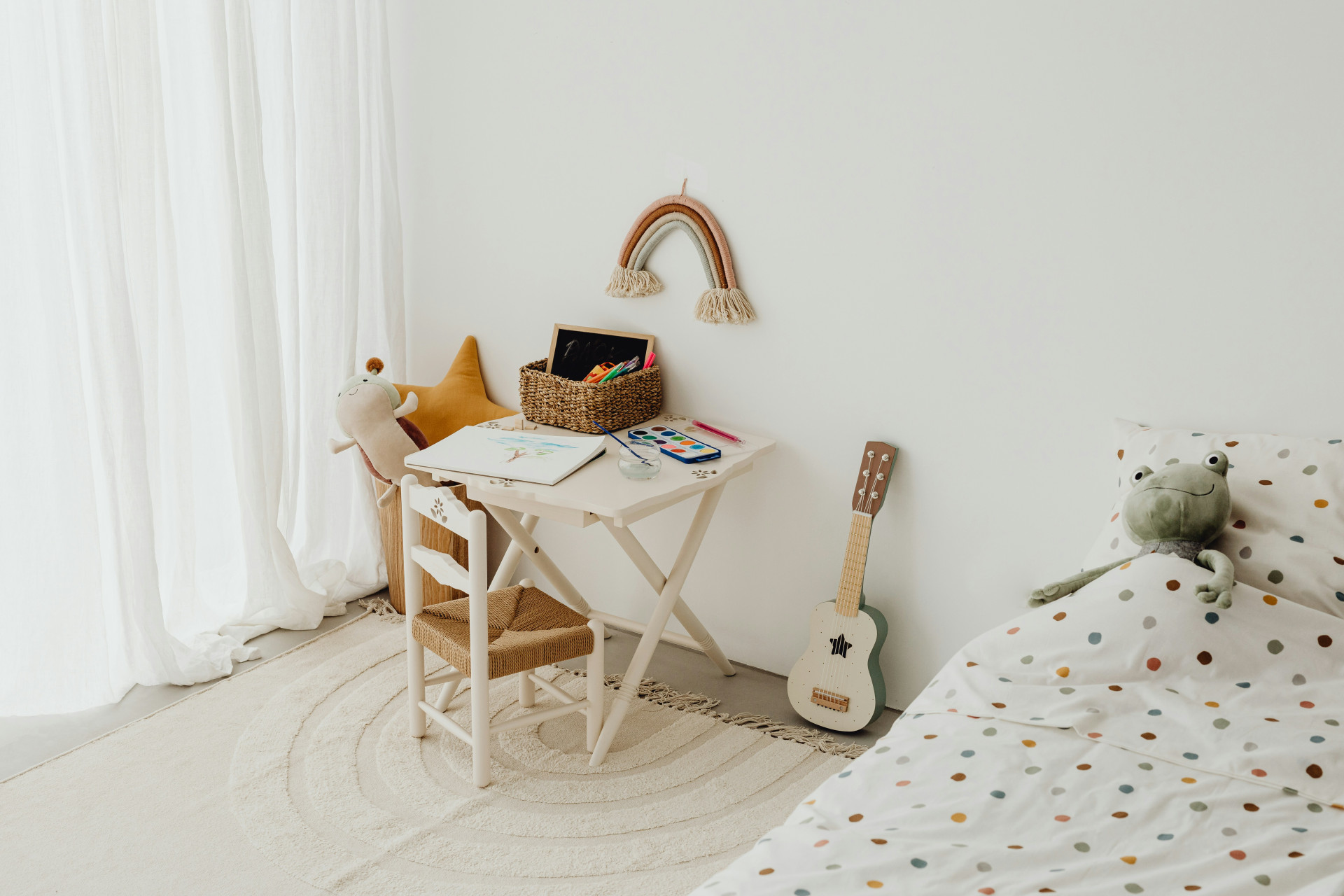
Once the base is set, start layering different textures and finishes. A soft rug, a woven basket, and a metal shelf can create a balanced contrast that feels lively without becoming cluttered.
Play with Textures and Surfaces
Children experience the world through touch, so texture is key. Smooth, rough, soft, and hard surfaces all add variety and invite exploration.
- Textiles like cotton, wool, and linen add coziness and help absorb sound. Use them in cushions, curtains, and bedding.
- Wood and bamboo bring warmth and a natural look — perfect for furniture and storage.
- Metal and plastic can be used sparingly to add a modern or playful edge.
- Natural elements such as cork, rattan, or stone connect the space to nature and create balance.
By combining materials with different tactile qualities, you create a room that feels alive and engaging — one that grows with your child.
Let Colours and Materials Work Together
Materials and colours go hand in hand. A good mix works best when the colours complement each other. If you choose warm wood tones, pair them with earthy shades like sand, terracotta, or olive green. If your base is white or grey with metal accents, bring in colourful textiles and playful details for contrast.
A helpful rule of thumb is to stick to three or four main colours and let the materials provide the variation. This keeps the space calm and cohesive, even with many different elements.
Use Materials to Define Zones
A kids’ room often needs to serve multiple purposes: play, sleep, study, and storage. Materials can help define these zones. A soft rug can mark the play area, while a wooden desk with metal legs signals a workspace. A fabric canopy or tent can create a cozy sleeping nook.
By using materials strategically, you can organize the room without adding extra walls or bulky furniture.
Keep It Personal and Flexible
A child’s room should evolve as they grow. Choose materials that can be mixed, matched, and updated over time. A wooden dresser can be repainted, textiles can be swapped out, and wall art can change as interests shift — all without a full redesign.
Let your child have a say in the materials and details. Maybe they love soft fabrics, shiny finishes, or natural textures — their input makes the space feel personal and meaningful.
Think Sustainability and Quality
When mixing materials, consider durability and environmental impact. Opt for natural materials and well-made pieces that will last. Vintage finds, hand-me-downs, and thrifted furniture can add character while being eco-friendly choices.
Mixing materials isn’t about buying new things — it’s about creating harmony between what you already have and what fits your child’s needs and lifestyle.
A Room That Grows with Your Child
A kids’ room with a thoughtful mix of materials isn’t just beautiful — it’s a space that inspires creativity, play, and calm. By combining different textures, colours, and finishes, you can design a room that feels both lively and comforting. Most importantly, it’s a space that can grow and change right alongside your child.